
Small Firms Should Budget for Accepted Video Outputs
|
Getting your Trinity Audio player ready...
|
A small company can generate many clips and still finish the week with nothing safe to publish. Raw output volume ignores the time spent preparing references, reviewing factual drift, correcting captions, and rejecting attractive mistakes. The useful cost unit for an AI Video Generator is the accepted clip.
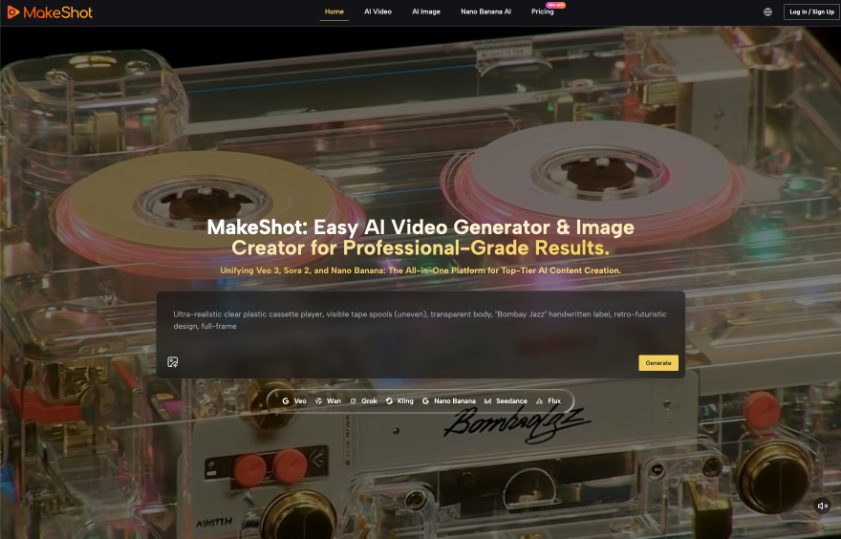
Imagine a local repair service preparing three short promotions: a homepage hero, a vertical social clip, and a customer follow-up message. MakeShot can create text-to-video or image-to-video outputs across several models. The budget question is not how many attempts a plan allows. It is what the business spends to obtain three clips that match the service, brand, placement, and legal boundaries.
Count the Work That Happens Around Generation
Begin the ledger before opening the tool. Record time for the brief, source collection, rights checks, generation, review, correction, export, and placement testing. Add direct credit cost separately. This exposes whether the expensive step is production, judgment, or rework.
Preparation Cost Prevents Later Review Debt
A verified logo file, approved service description, rights-cleared photograph, and defined placement take time to collect. That time belongs in the project cost. Skipping preparation can make the first attempt look cheaper while producing more variants that nobody can confidently approve.
For the repair service, the brief might prohibit depictions of electrical work if the company handles only appliances. It might also lock the uniform color, service area, and phone-number source. Writing those boundaries takes twenty minutes; reviewing six misleading clips can take far longer.
Review Cost Grows With Plausible Errors
A visibly broken clip is quick to reject. A polished clip showing the wrong tool, uniform, building, or repair process demands closer review. Track review minutes per attempt and the role of the reviewer. Owner time and specialist time are not interchangeable simply because neither appears on the credit balance.
| Ledger stage | What to record | Hidden cost signal |
| Brief | Staff minutes and approved claims | Repeated clarification |
| Generation | Credits, attempts, waiting time | Many near-duplicate outputs |
| Review | Reviewer role and minutes | Plausible factual drift |
| Correction | Editing or regeneration time | Same defect returns |
| Placement | Export and live-page checks | Clip fails crop, mute, or load test |
Define Clear Acceptance Gates Before Comparing Any Attempts
Each placement needs a short gate. The homepage hero must explain the service without delaying the page or inventing work. The social clip must survive mute autoplay and vertical cropping. The follow-up message must remain legible on a phone and avoid claims beyond the actual service area.
Write the gates on one page and give them to every reviewer. A marketer may focus on message, while the owner notices an impossible repair action. Shared gates let both record a specific failure without turning the review into a debate over personal taste.
Use Binary Gates for Factual Requirements
Correct service, authorized imagery, accurate text, permitted logo use, and no invented testimonial are pass-or-fail conditions. Do not average them into a visual score. A clip that looks excellent but fails one factual gate is rejected, not “almost accepted.”
Compare Creative Quality Only Among Factually Safe Clips
Once two clips are factually safe, compare pacing, tone, composition, and brand fit. This order prevents a visually preferred option from receiving repeated repair work while a quieter, usable option is ignored. It also makes rejection reasons consistent enough to improve the next brief.
Use a small scale and require one sentence of justification. “Version B reaches the service message before the second shot” is actionable. “Version B feels premium” may reflect music, color, or camera movement and gives the next operator no stable direction.
Calculate accepted cost as total preparation, generation, review, correction, and placement cost divided by accepted clips. Keep attempts as a diagnostic number, not the denominator that makes production look efficient. A week with twelve attempts and three accepted clips should be evaluated through those three deliverables.

Compare the Ledger With the Existing Workflow
The relevant alternative may be a freelance editor, a reusable motion template, filmed phone footage, or no video at all. Price each route against the same three placements and acceptance gates. The comparison should include staff review and revision, not only invoices or subscription fees.
A phone recording may have higher filming effort but lower factual review because it shows the real technician and equipment. A generated clip may be faster to explore but require tighter scrutiny. A still image may win the homepage when performance and trust matter more than movement.
Price Early Exploration Separately From Weekly Repeat Production
MakeShot may be efficient for testing several visual directions before a campaign decision. A fixed template may be cheaper after the winning direction repeats every week. Label exploration cost as learning rather than pretending the first accepted clip represents steady-state production.
After three comparable jobs, calculate a rolling accepted cost. Include unused but reusable assets, such as approved prompts, reference packs, and caption templates. Exclude sunk experiments that will not recur, but keep their lessons in the brief. This produces a fairer view of whether the route is becoming repeatable.
Track the leading rejection reason over a month. If text repeatedly fails, move it to live overlays. If service details drift, use tighter image references or simpler illustrative scenes. If page performance fails, reduce duration or replace the hero with a still. The ledger should change the workflow, not merely document waste.
Set a stop rule as well. If a concept fails the same factual gate twice, return to the brief or source instead of generating more variants. More attempts from a weak input usually multiply the review queue rather than improve acceptance.
Review the ledger with the person who controls the budget, not only the person operating the tool. The owner may accept higher production cost for a trustworthy homepage asset while rejecting the same cost for a disposable social experiment. Placement value belongs beside accepted cost.
Keep cancelled concepts in a separate learning total. They reveal which campaign ideas were tested cheaply before filming or design work began. That can be genuine value, but it should not be mixed with the cost of clips promised for publication.
Paid plan features such as rolling credits, private generation, storage, watermark-free output, concurrency, or commercial-use terms can affect the calculation. Special model credit treatment may also change attempt cost. Use the current plan details at purchase time, but keep staff review visible because plan tables do not price it.
Buy the Route That Repeats Successfully
An AI Video Generator earns a recurring budget when accepted cost falls across comparable jobs and the review record remains trustworthy. MakeShot may also be valuable for one-off exploration even when another route wins repeat production.
For a small firm, the honest question is simple: how much time and money produced the clips the business could actually use? Budget from that answer. Generation volume is activity; accepted clips are output.
