Poder de la naturaleza

Rainforest Giants

Compartí esta noticia !

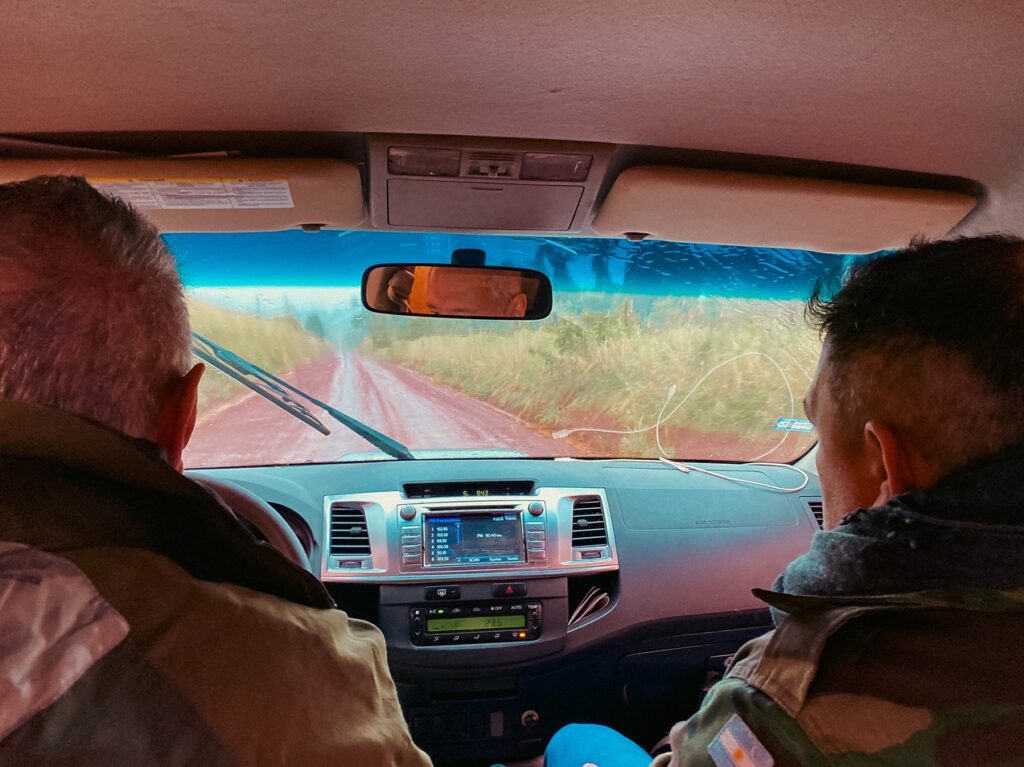
To reach the reserve, take the exit on National Route 12 and then drive for about 24 kilometers along dirt roads. The scenery starts to shift between afforestation areas and land prepared for new plantations, until the rainforest gradually starts taking over the landscape. Two magnificent toucans suddenly appear, welcoming the small group of visitors to the reserve and breaking the apparent calm of the rainforest. The only way of getting to the place is by 4×4 trucks, and it is not open to tourists –only biologists, scientists and nature photographers are allowed to enter, but they must obtain a special permit first.

The San Jorge natural reserve, owned by the forestry company Arauco, is the largest private reserve in Misiones. It covers 16,500 hectares of well-preserved rainforest, and it is home to unique animals such as the mythical yaguareté, guardian and top predator of the rainforest, as well as pumas, capybaras and tapirs.

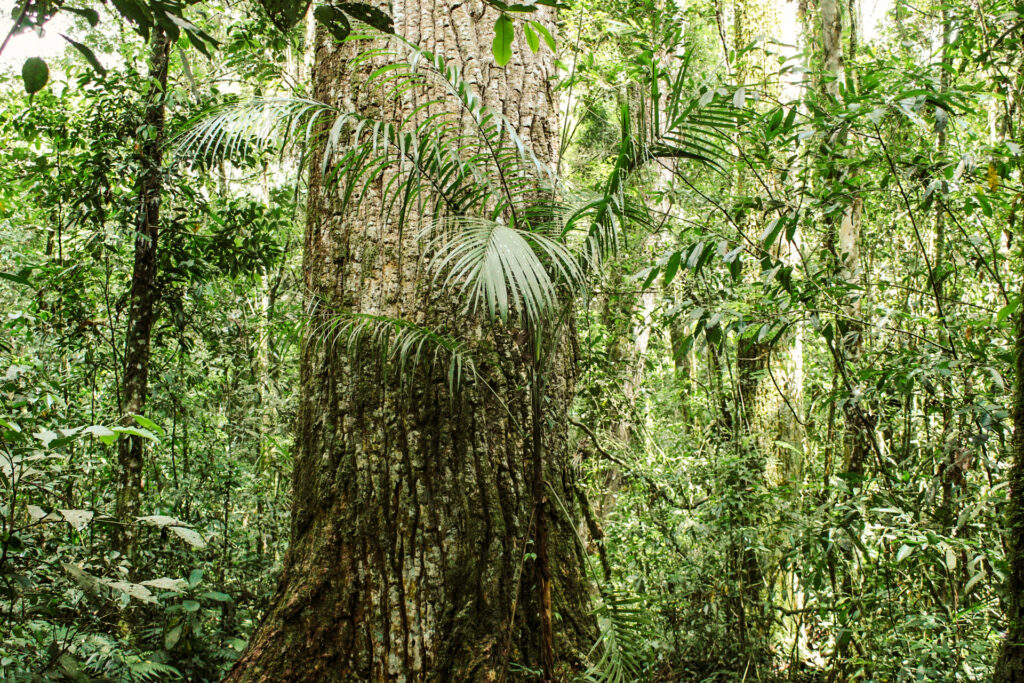
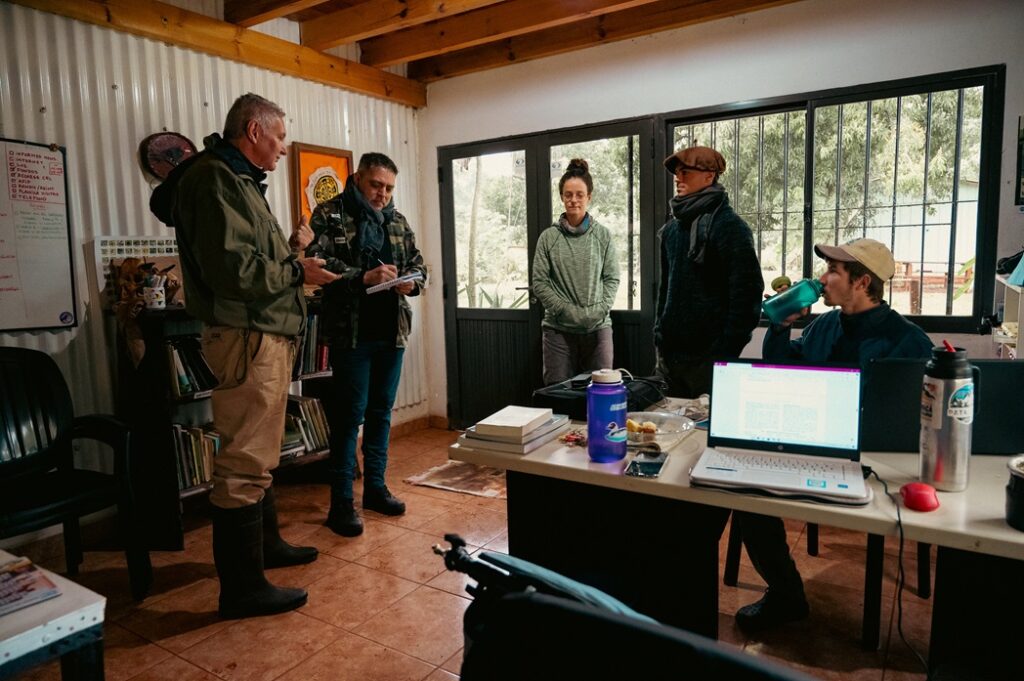
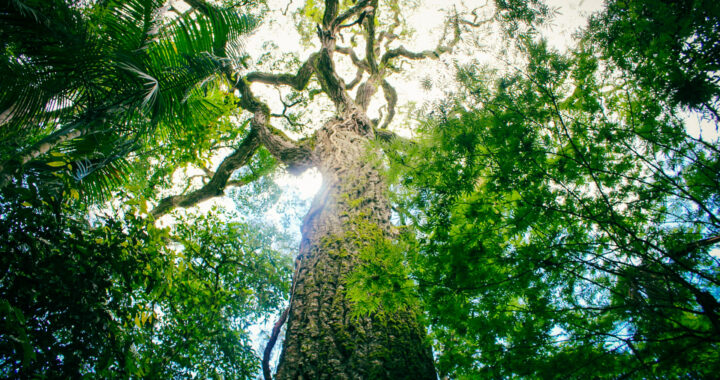
The park rangers Sergio Palavecino and Darío Moraes De Lima excitedly explain that the rainforest remains in the same condition as in the times of Alvar Núñez Cabeza de Vaca. According to a dendrochronology analysis carried out in the reserve, the trees —silent giants— are between 500 and 700 years old, which further confirms that the place remains unspoiled.

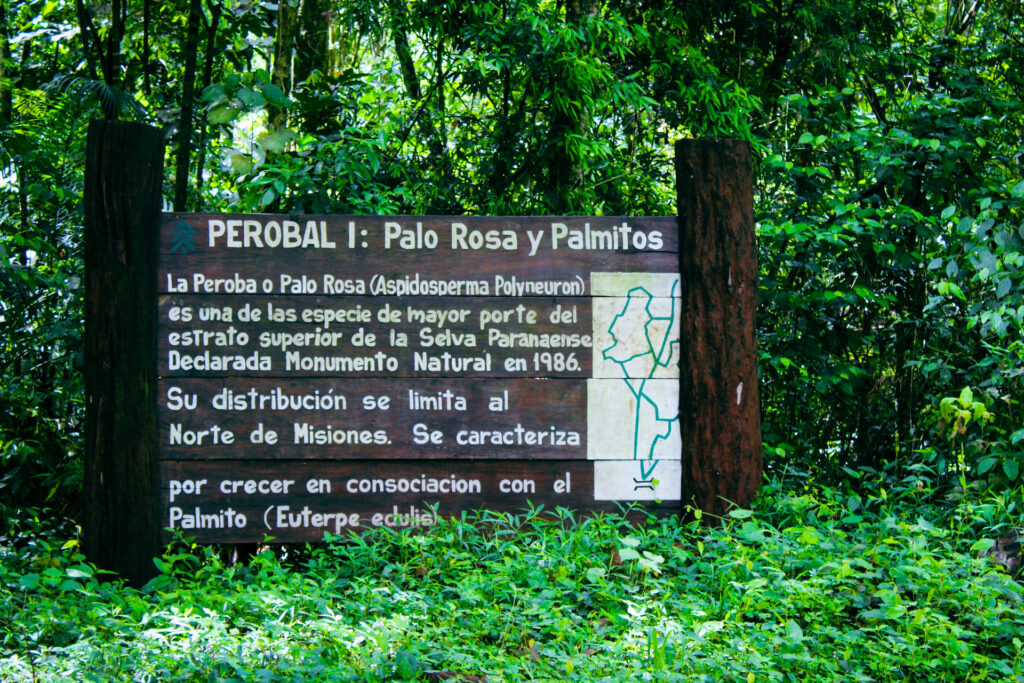
Every few steps, a Palo Rosa tree (Aspidosperma polyneuron) can be found in the reserve. These imposing natural monuments have a unique feature, as they are the tallest specimens of the Upper Parana Rainforest. Particularly in this protected area, they stand out for their extraordinary height, reaching approximately 35 to 40 meters. They are not only taller than those of the same species in the Iguazú National Park but also taller than specimens found in other countries. 

Another distinctive feature is that the Palmito tree (Euterpe edulis) always grows at the base of the Palo Rosa. The Palo Rosa is also known as ‘the yaguareté of the trees’ thanks to its significant contribution to biodiversity and its role as a key indicator of the rainforest good health. The yaguareté is also present by leaving its claw marks on tree trunks. And since there is plenty of food, its roar can always be heard throughout the reserve. These are its domains.

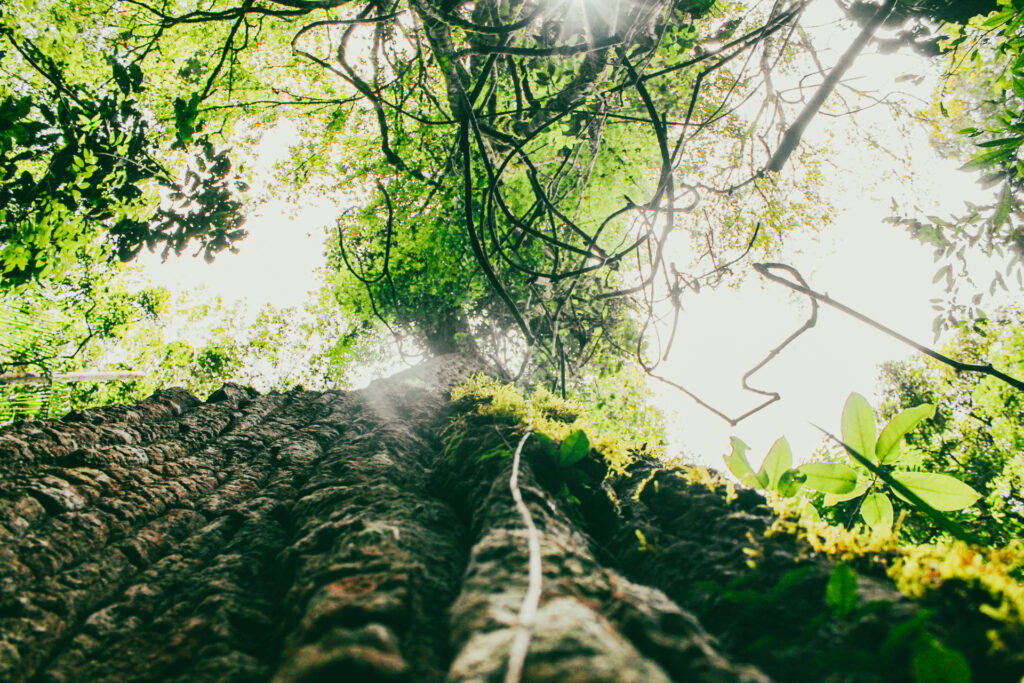
The passing of time is, however, inexorable as evidenced by the fallen giants of tremendous proportions that are gradually transformed into new elements of the environment. The cycle of life.
Other tree species are also abundant in the area, such as the Cedro (Cedrela fissilis), Guayubira (Patagonula Americana), Cancharana (Cabralea canjerana), and Loro Negro (Cordia trichotoma). These trees are a living testimony of the exuberant nature still standing in Misiones, which preserves 7% of the original Atlantic Forest. 

In this context, the reserve has managed to keep those century-old trees standing despite changes in the administration. The company Alto Paraná –now called Arauco– bought the land from the Pérez Companc family and kept intact its conservation efforts. This is why the reserve is a key location for the forest corridor.

‘In the light of the current global reality, at Arauco we are tripling our efforts to mitigate the effects of climate change, reverse biodiversity loss, and tackle pollution on our planet. In Argentina, Arauco preserves almost half of its heritage as native forest. We are aware of the importance of protecting biodiversity to ensure the well-being of our planet and its inhabitants. As a result, we get healthy ecosystems that provide basic resources for sustaining life, enhance the hydrological cycle and water quality, and significantly improve CO2 capture and storage,’ expressed the Chilean company to Economis.

‘In line with the above, our sustainable forest management allows us to keep running operations that guarantee biodiversity preservation, productivity, restoration capacity and forest vitality. Therefore, we play a crucial role in the fight against climate change,’ the company emphasised.

San Jorge was declared a Private Forest Reserve in 1999. It covers an area of 16,500 hectares  of well-preserved Upper Parana Forest, rich in biodiversity. The reserve has more than 110,000 hectares of native forest and areas of significant environmental conservation value, a critical native forest block that connects two vast reserves in the northern region of Misiones: the Iguazú National Park and the Urugua-í Provincial Park, whose central stream flows nearby.

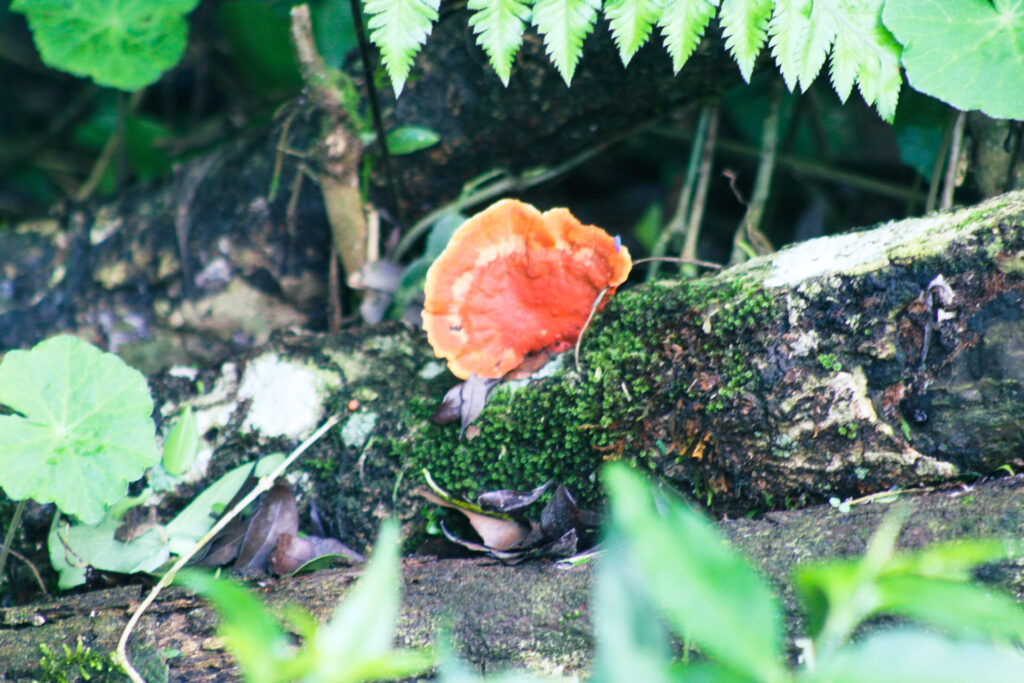
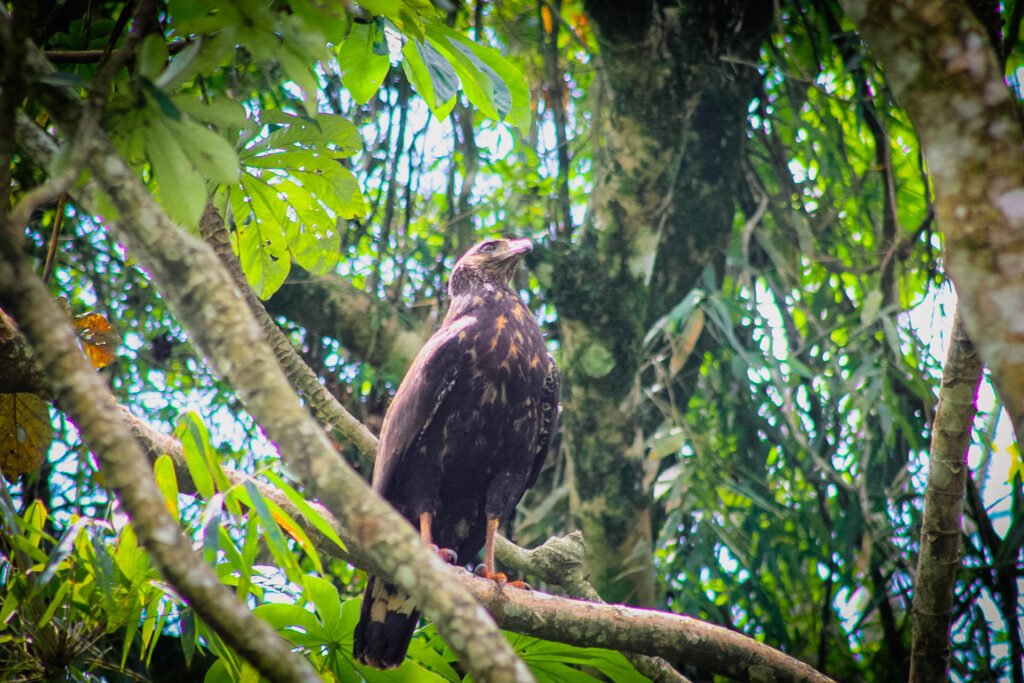
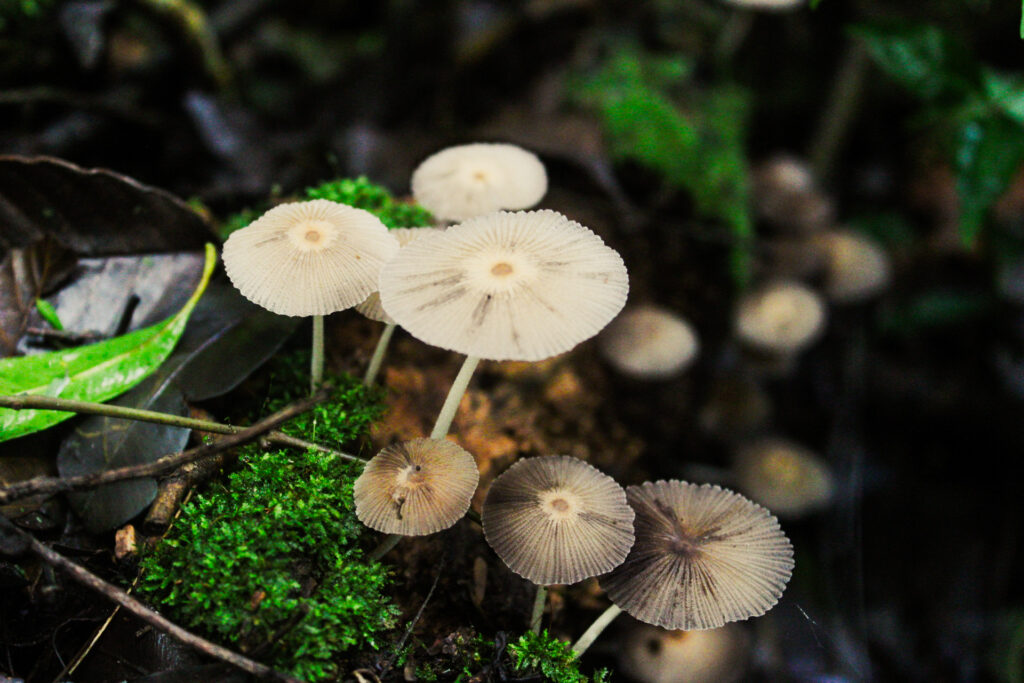
This protected area also shelters a wide range of flora and fauna, including a high diversity of orchids, trees and plant species with pharmacological properties. It is also home to endemic species, ferns, lichens and fungi. Regarding animals, a considerable number of birds are present, many of which are endemic and endangered. Mammals, such as the yaguareté and the tapir (both declared natural monuments), can also be found in the reserve. 

Additionally, the reserve is home to a wide variety of landscapes and ecosystems, such as wetlands and dense forest areas.

Environmental protection is key. Besides Palavecino and Moraes De Lima, six other park rangers are exclusively dedicated to the reserve. In total, 50 people are involved in controlling and monitoring for conservation and fire protection, and all of them have a strong sense of belonging and love for the rainforest. Palavecino, born in Wanda, is actually a systems analyst who became a park ranger and developed a deep connection with the rainforest. Moraes De Lima, a native of San Antonio, is intimately familiar with every meter of the forest he oversees.

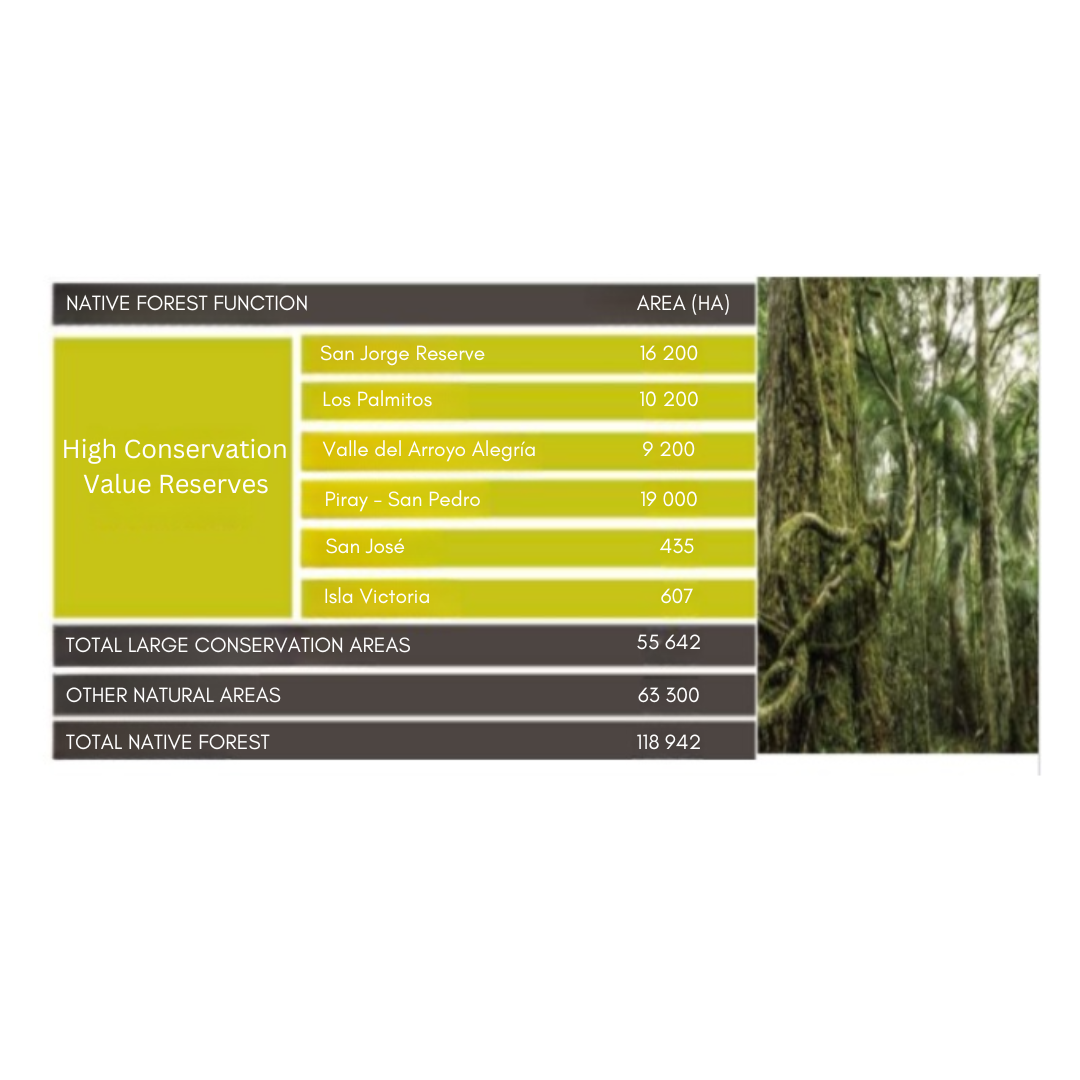
The park rangers’ work is fundamental for preservation. Arauco owns 118,942 hectares of native forest in Misiones, with the San Jorge reserve being the largest in the province. However, there are other reserves of high conservation value: Los Palmitos (10,200 hectares), Valle del Arroyo Alegría (9,200 hectares) and Piray, along with San Pedro (19,000 hectares).
Traductor: Selene Grahl

Revisor: Pilar Peyrano

Revisión final: Norma Andrada

Tecnicatura Universitaria en Traducción e Interpretación en Inglés – UCAMI

Correo: c.extension@fch.ucami.edu.ar 

Compartí esta noticia !

Andresito, Where Protecting the Rainforest is Cheaper

Compartí esta noticia !

The economic context is complex. The deregulation of the yerba mate market has collapsed the prices of the raw material of the main production source of the town, which is also the most affected by the distribution of provincial revenue sharing.

Andresito, however, implemented a groundbreaking decision that implies collecting less; that is, fewer resources in exchange for a green legacy. This is an example that stands out amongst other initiatives that also aim at preserving biodiversity while tackling climate change. In first-world countries, taxes are being charged to producers to offset agricultural emissions. On a global scale, Denmark has made the first step. As from 2030, this climate tax on agriculture will be set at 300 Danish kroner (40 euros, 43 US dollars) per CO2e ton, increasing to 750 Danish kroner (100 euros, 107 US dollars) by 2035.

Until a few years ago, Andresito was the only municipality established in Misiones. Apart from Parque Nacional Iguazú (Iguazú National Park), in the late 1970s and early 1980s, a colonization program was launched to encourage numerous families to challenge the forest by producing yerba mate and extracting timber in an area of virgin rainforest. Forty years later, though no longer abundant, some forest still remains. Therefore, Andresito decided to award those who preserve it in their farms with municipal tax exemptions.

Mayor Bruno Meck smiles as he explains the details of the preservation plan, given it was set right in the midst of an economic decline. ‘In Andresito, people have voted for this change, whose consequences for the economy are negative, especially for the yerba mate. But just as there is a national call for adjustments by the national government, the private sector must respond in the same way – thus, it is a matter of adapting. We made the necessary adjustments within the municipality: we have not renewed multiple service contracts, we have restricted plenty of services and, naturally, with yerba mate accounting for 70% of the municipal economic activity, today’s low prices affect us significantly. We have more than 1470 kilometers of roads, which is equivalent to the distance from here to Mar del Plata. Maintaining roads in good condition for production is complicated due to the high cost of fuel and spare parts. So, overall, what is happening affects us greatly, but that does not mean we should give up – on the contrary, we must double our efforts, seek out other initiatives and overcome the situation,’ he explains.

In this context, the decision of resigning resources in exchange for environmental protection takes on a whole new dimension.

‘We did not reduce taxes; we removed them,’ Beck claims confidently. ‘The truth is that if we do not take care of the environment in this region, where we are surrounded by parks, all our efforts will be in vain. We promote forest and biodiversity preservation; that is incredibly important for us. In a way, we are sparking this initiative in the community; we can protect, we can do something. It is not much, though. I wish the province could do the same,’ the mayor explains, who has been in office for several terms.

The response to the municipal initiative was very positive. ‘So far, we have not had any problems – quite the opposite, actually. This is pushing us to continue moving forward, as there are many people who still have forests in their farms, but do not see any economic benefit from it. So that is also the goal: to encourage them to preserve these areas.’

There are many young people behind the environmental preservation plan, as well as Hugo Cámara, an environmentalist that made Andresito his home. ‘Through the City Council, the municipality created an ordinance that introduces municipal conservation and development corridors, an innovative concept that highlights the importance of certain sectors of the municipality, where keeping the connectivity between the different blocks of protected areas is imperative. Andresito has several protected areas, but there are also many private properties outside those areas that include valuable forests that need to be preserved; for that reason, we created two corridors. One of them is almost fully established: the Urugua-í Corridor, best known for the Ecoduct, which has become almost a symbol. The other is in the Península, with a corridor that covers approximately 5000 to 5300 hectares. The goal is to preserve the mini-corridors that connect the various protected areas. Currently, there are roughly 11 protected areas within the corridor, together with national and provincial areas and private reserves under different types of management,’ Cámara listed. Amongst the main protected areas are Puente Verde – surrounded by lodges such as Surucuá – reserves like the one that produces organic yerba mate for Guayakí, or a plot belonging to Bayka, led by Matías Romano, the owner of San Sebastián de la Selva, who conducted an intense jungle restoration plan facing Foerster Park.

Forest protection is also an attraction for other sectors of the economy, namely tourism. ‘The municipality offers a tax incentive for conservation, which is an innovative approach at a municipal level. The response has been quite positive. At present, we have seven properties already sharing a preservation area and around 300 hectares of protected land within the corridor. That is a significant figure since they are key areas to preserve, which include important properties and people who have recognised that their farms hold a high value beyond the tax exemption. The Península has always been special for everyone; what we still have to work on is fostering that feeling of pride that farms are part of a larger project and that they help preserve biodiversity. Not everyone has a yaguareté (jaguar) walking around their property – some may see it as a catastrophe, whilst others consider it an honour,’ Cámara states.

‘It is a slow process, because it obviously takes time. It is not just about establishing a reserve –it is also about creating a management plan, conducting surveys and mapping, as well as determining its extension, provided that only the forest areas are included, not the entire property. The tax exemption does not cover the whole land, but only the plot that will be preserved.’

.-.-.-.-.-.-.-.-.-.-.-.-.-.-.-.-.-.-.-.

Traductor: Fernanda Sotelo

Revisor: Norma Andrada

Tecnicatura Universitaria en Traducción e Interpretación en Inglés – UCAMI

Correo: c.extension@fch.ucami.edu.ar 

Compartí esta noticia !

Jejy’a, the Gourmet Fruit from Misiones’ Rainforest that Delights the Most Demanding Cuisines

Compartí esta noticia !

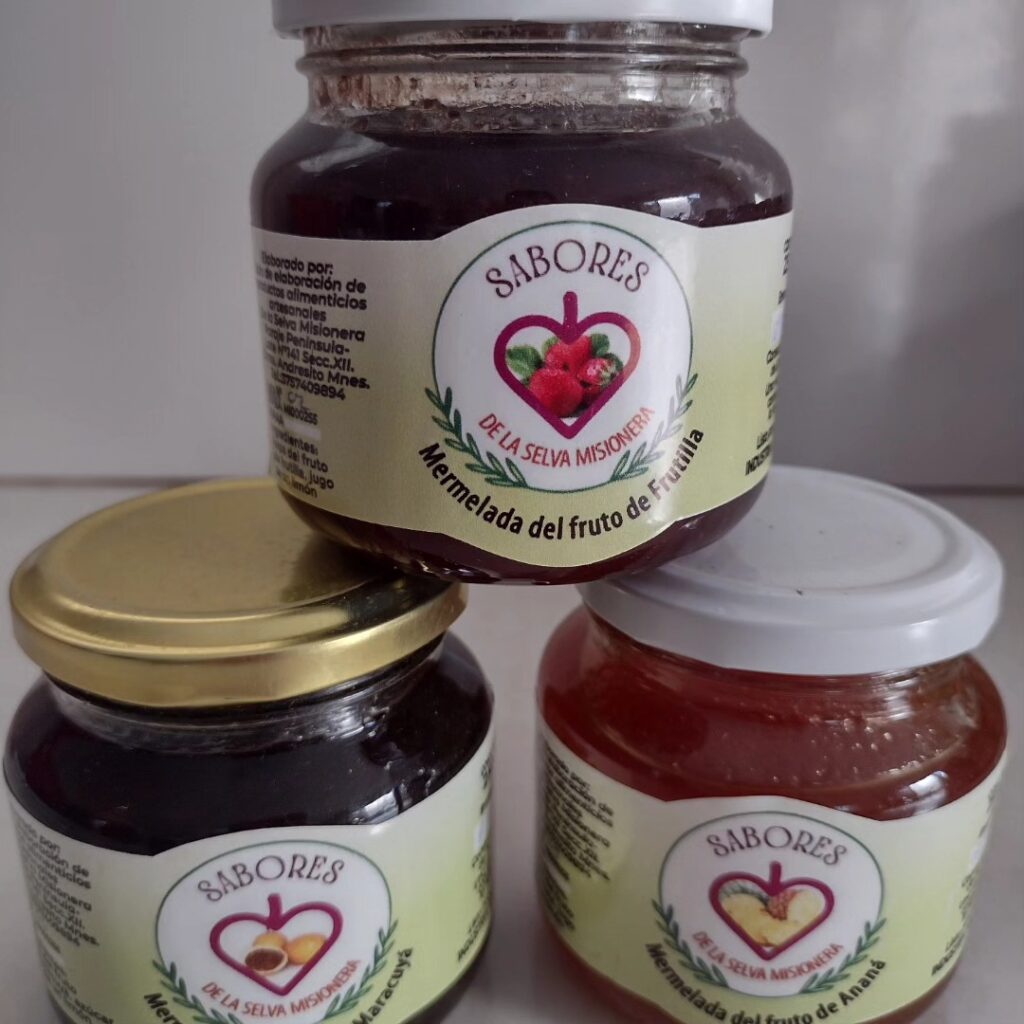
The farm is located at about 30 km from Comandante Andresito town, with a long dirt road, the river, and Iguazú National Park just a short distance away. The rainforest surrounds everything in the Peninsula and it is a key factor in the development of the product that Myrna offers to the world: Jejy’a. This superfruit has been available since immemorial times but it is only now harvested sustainably. It comes from  the fruit of the palmito plant (Euterpe edulis), a treasure hidden in the rainforest of Misiones. However, just a few years ago, eating palmito was a synonym for cutting down trees, and Myrna decided that she was not going to cut down endangered trees, instead, she was going to use the fruits in a jam factory that she had set up in the middle of the farm. 

“We produce artisanal products such as jams, syrups and native fruit pulps; but when native fruits are not available, we use cultivated fruits instead. Additionally, we are reforesting with native fruit trees to improve our production”, explains Myrna Elizabeth Korniejczuk to Economis. Myrna is the head of Sabores de la Selva (Flavors from the Forest), a family-run venture.      

Jejy´a is a Guarani term that was chosen when the palmito pulp project was being developed to differentiate it from the açai in Brazil, which is a very similar fruit. They both belong to the palm tree family, but it is difficult for people to know the difference, it just takes time. Nevertheless, it is a Guarani term that means “pulp of the palmito fruit.” We produce it sustainably from the native rainforest while preserving the rainforest. That’s the core idea behind the entire venture: to protect what remains of our rainforest and encourage other people to do the same. For that reason, we joined Puente Verde, a preservation project that has a lot of  advantages. The program is very important because, some years ago, the surrounding area of my farm was rainforest, and it’s astonishing how easy it is to get permission for the slash-and-burn agricultural technique, clearing  20, 30 or even 50 hectares. I think that the municipality is making significant progress with the Green Corridor and offering tax exemptions as a means of preservation is a fantastic idea. But I think that this goes beyond the municipality. We are in the heart of the rainforest and work hard to preserve whatever is left. We are near the Falls, opposite to the Iguaçu National Park (Brazil), the Yacuy Park and the reserve. The goal is to preserve what little remains of the native rainforest,” explains the producer, who has spent her entire life in the area. 

Are you planting trees in your native rainforest farm?

Yes, we used to have  a two-and-a-half-hectare yerba maté plantation , but between 2021 and 2022 it was lost due to a severe drought in Andresito. So, my family and I talked about what we were going to do because we didn’t have any other income. We decided to set up this jam production factory and plant native fruits on the land where yerba maté had grown in the past. To make that happen , we had to sell one hectare of our farm, as we had no other source of income to sustain ourselves. Unfortunately, that was the part I didn’t like, but sometimes what is most costly it hurts the most, we sold it and with that money we could set up the production facility.

This is a laboratory, how did you set it up?

It was difficult to build. Andresito is 35 kilometers away and the roads are unpaved, so it was also challenging for the bricklayer to bring the necessary materials. However, I had contacts from my time working in the Agroecological Cooperative of Peninsula, contacts for registration of the products and the production facility. Maria Ojeda, a food safety specialist, helped me to set up the facility to be ready for approval. She came with the people in charge of registering the Jejy´a pulp and jam, first at local and then at provincial level. Now we are working on obtaining national registration for honey extraction and packaging.

Where are you selling now?

We are selling directly to private individuals from the area. People who are familiar with our plant and call and say “Can you bring me such and such product?” In Iguazú we are taking orders from hotels and restaurants. They are interested in the  native fruit pulp and specialized products we offer.

You stopped producing yerba maté and now you are planting native plants… Are you making a living from fruits today? 

Yes, the three of us, my husband, my daughter and I are living off the fruits and pulps. However, many fruit plants are still young because they are being replanted. Native fruits take three to four years to grow, the quickest to mature is pitanga (Eugenia uniflora), while the rest take between eight and ten years. So I have some plants, I have two or three little plants but I buy the rest of the produce from  neighbors. A large portion  of the native fruits that people request in Iguazú come from them, as my small      production is not enough and one of the requirements of the Puente Verde Program is that this initiative should help the local community.

The concept of a family venture is “literal”. Her husband is the one who collects the fruits from the trees without cutting them down, climbing up just as a child. This way, the trees aren’t damaged and an “abundant harvest” is achieved.

Nowadays you are generating an economic activity in the area …

Yes, this  is because  I buy fruits and pulp from people who have large plantations. Therefore, to avoid wasting all that fruit, we turn it into jam. 

For that reason, you were chosen as one of the businesswomen in the Economic Confederation…

The truth is that I didn’t expect that award, it was something really nice, because this is a family business, and everyone contributes in some way, not just my husband and I.       

Preserve and regenerate

We are planting a variety of fruit plants to boost our business, but it becomes challenging during the dry months of the year, especially with some creatures, such as monkeys. They affected us severely, as they ate the palmito from the native rainforest. They pounced in just one single area because there is so little rainforest left, which impacted negatively on all of us who are working to protect it. It was a pity, as there was no production that year. That means that this is the first year that we can produce, with a good yield of palmito pulp, which is the most affected plant in the rainforest. The life of an entrepreneur is not easy; we have to face things beyond our control because running a business here is very different.

You have to be passionate…

Yes, it is about striving for a better future for ourselves, our children and grandchildren. I do this with a future vision in mind, when I’m no longer here, I hope my daughters will continue with this project, and continue preserving the native rainforest. I wish it to become a chain where all the knowledge is passed down from generation to generation, everything we have learned, and the most important thing: to love the native rainforest, to cherish what we still have of it with all its creatures and bugs. They may sometimes be challenging but they are all part of it. 

Juan Carlos Argüello

Journalist, director of Economis 

Traductor: Clarisa Benítez

Revisor: Luciana Sisterna

Revisión final: Norma Andrada

Tecnicatura Universitaria en Traducción e Interpretación en Inglés – UCAMI

Correo: c.extension@fch.ucami.edu.ar 

Compartí esta noticia !

Puente Verde, a Wilderness Connection

Compartí esta noticia !

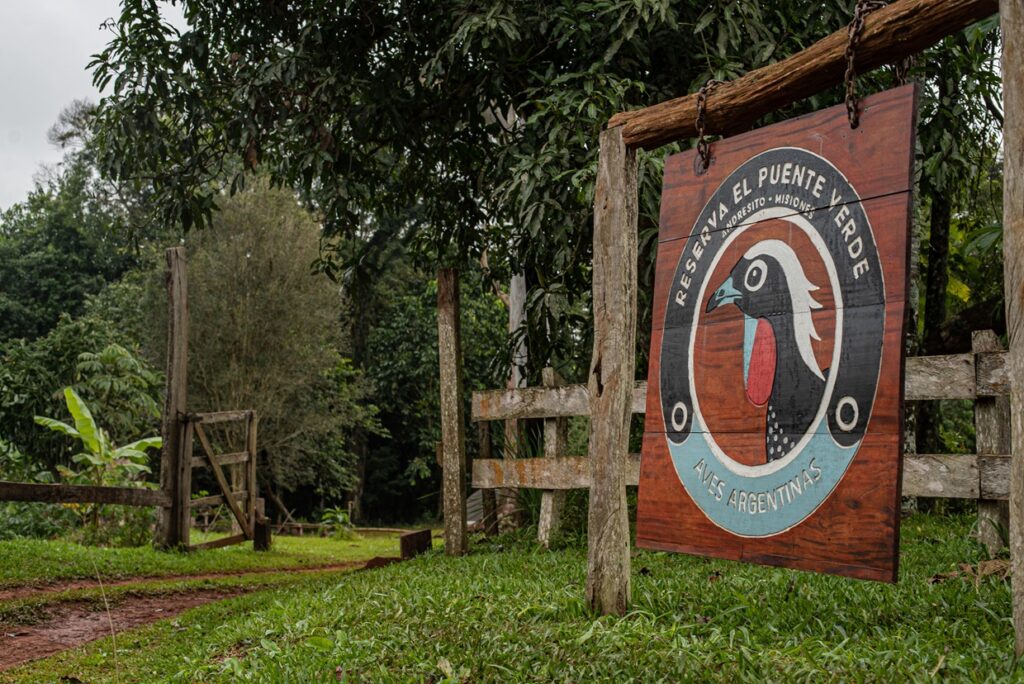
To reach this place, one must travel almost 30 kilometers from the heart of Andresito, a town in northern Misiones, located 350 kilometers away from Posadas. The unpaved road winds through yerba mate plantations, a handful of farms, a few schools, and increasingly scattered houses. Rainforest. A vast rainforest. At the end of this long road lies a new natural reserve. Its name reflects its key ecological role situated on the Andresito Peninsula: Puente Verde serves as a “wilderness connection”, between Iguazú National Park and the serene Iguazú River, which flows upstream from the world-famous waterfalls located 70 kilometers downstream and the National Park on the Brazilian side of the river, in addition to other nine provincial and privately protected areas.


Spanning 183 hectares of pristine rainforest, this reserve was bought by Aves Argentinas, the oldest environmental organization in Latin-America, with the aim of restoring a connection between the parks and ensuring the survival of the extraordinary flora and fauna of the region, with the iconic palo rosa (Aspidosperma polyneuron) and palmito (palm heart).

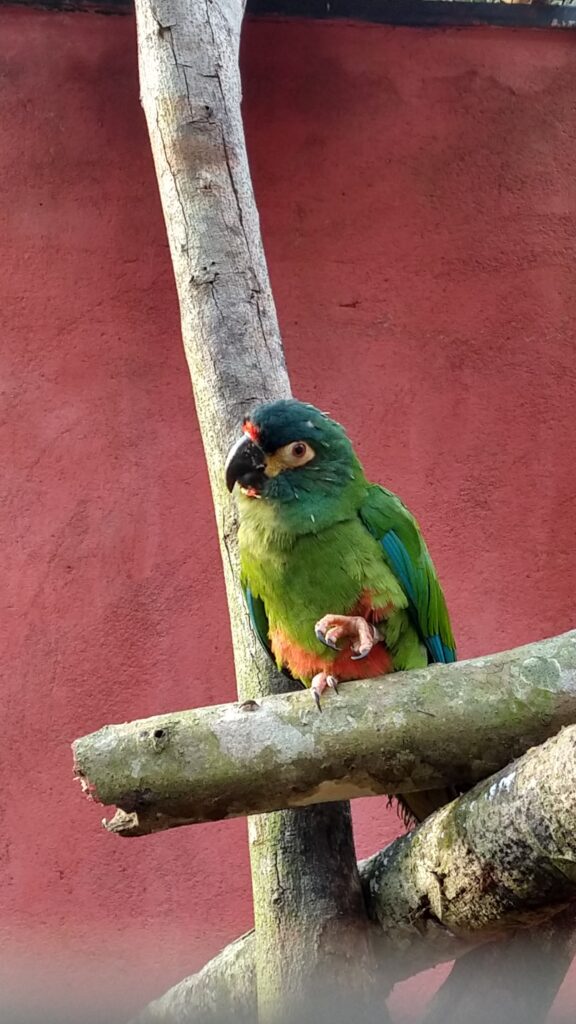
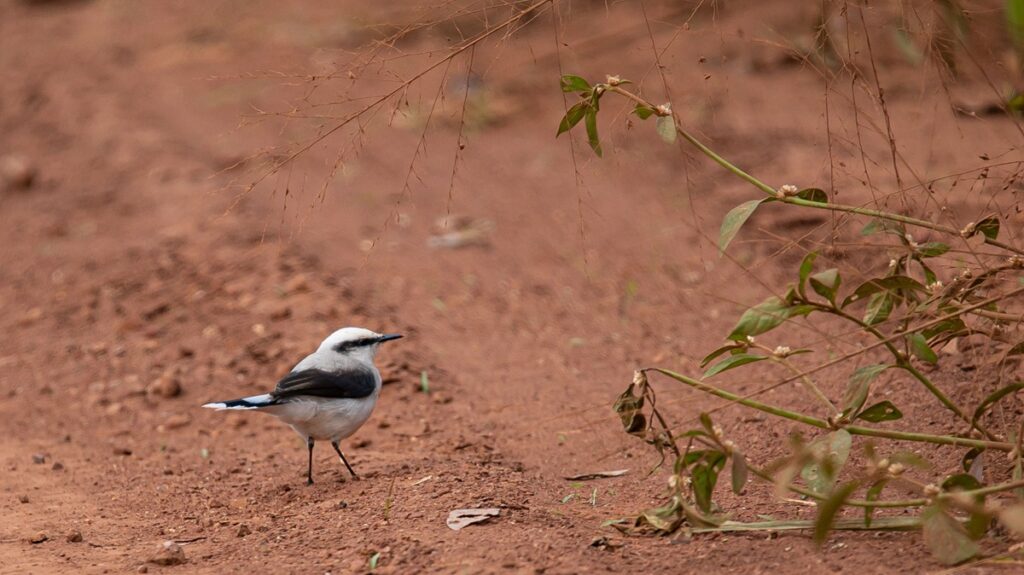
More than 282 bird species have been identified here —over 50% of the total bird species in Misiones— along with tapirs, monkeys, rodents, snakes and the legendary yaguareté (local jaguar).Hidden cameras and local residents have spotted numerous animals roaming the area. Their roars, claim the park rangers, echo from deep within the rainforest. The pájaro campana (bare-throated bellbird), a bird once thought extinct in Misiones, can also be heard. Soon, a maracaná de lomo rojo (red-shouldered macaw) will be introduced. Rescued and rehabilitated at the Güira Oga Wildlife Hospital, this parrot is part of an ambitious effort to establish a stable population of a species that had disappeared from Misiones. This initiative seeks to restore a natural monument to its former glory.

Puente Verde is part of a broader initiative: a biological corridor in Andresito spanning 5,300 hectares, out of which 3,574 hectares are woods, and 1,700 hectares consist of farms owned by people committed to preserving the rainforest. This effort is supported by a municipal program offering tax exemptions in exchange for rainforest preservation. One section runs along the Iguazú river, while the other surrounds Foerster Provincial Park and the Urugua-í Provincial Park. On both sides of the town a distinctive trend emerges —a growing commitment to preservation, from small plots to vast tracts of land.

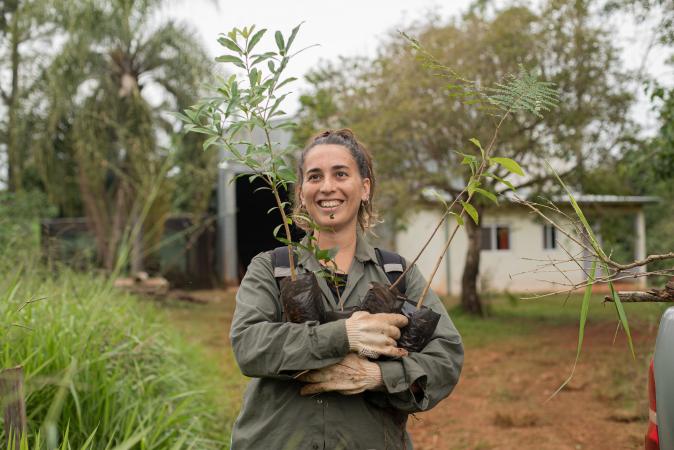
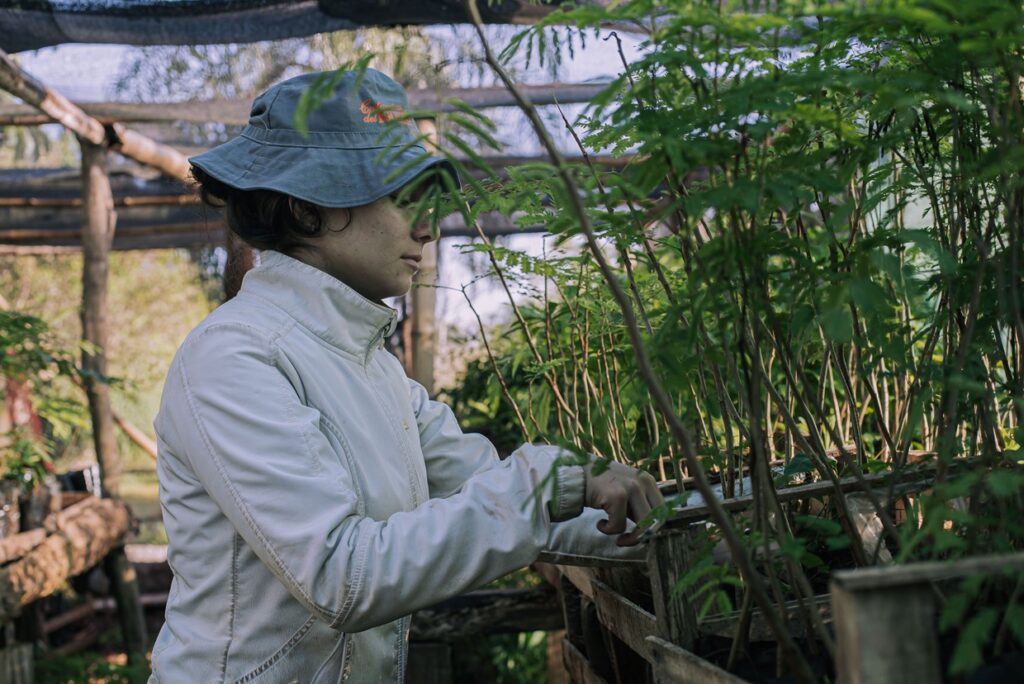
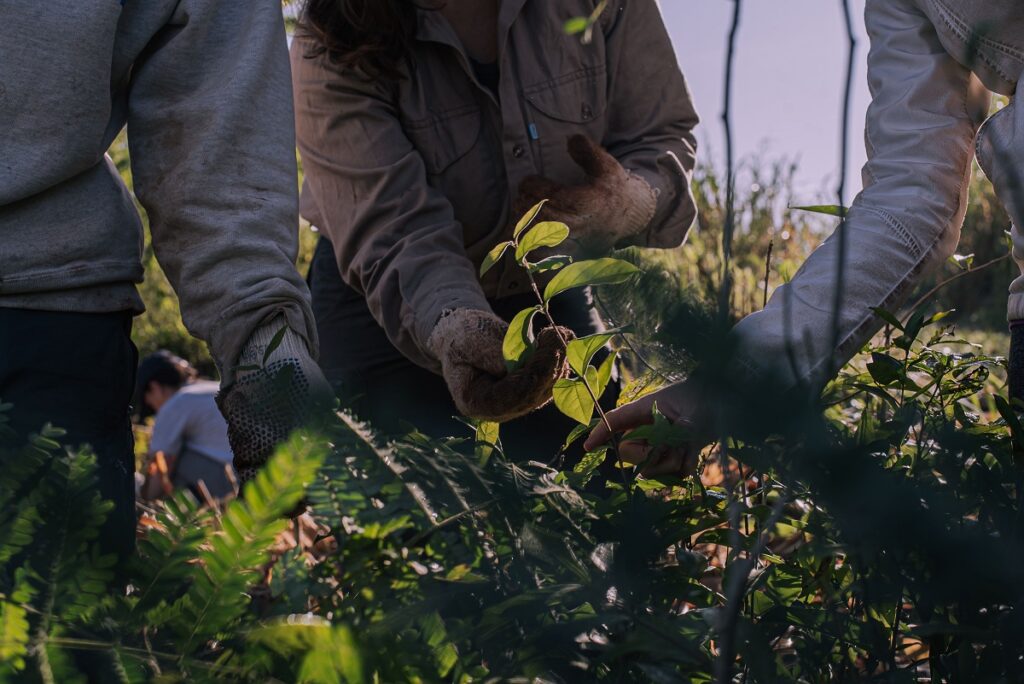
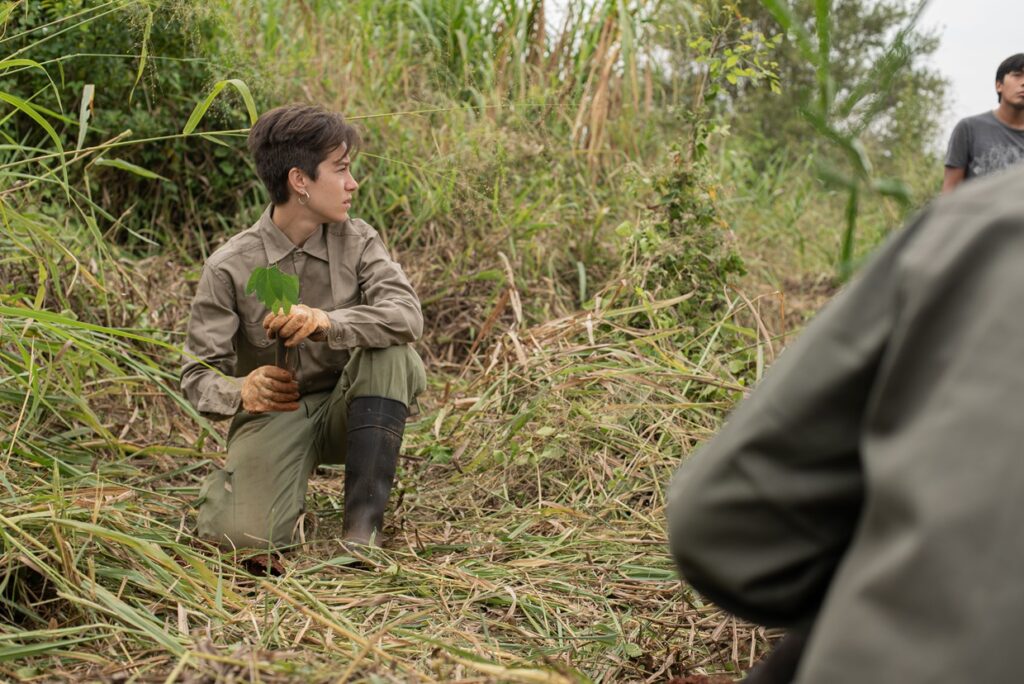
Puente Verde is surrounded by farms that are also dedicated to the preservation of the rainforest, such as the Surucuá Lodge and Guayakí, the latter known for producing organic yerba mate. These efforts support more than 20 direct job positions in this remote area of the province where in addition to preserving the rainforest, an ambitious species restoration plan is underway, focusing on creatures like the loro vinoso (vinacious parrot) and the jacutinga, as well as trees like the loro negro or the cedro (cedar). A large nursery cultivates various species for reseeding the rainforest and distributing among local residents who wish to participate in rewilding initiatives.A tree can take from ten to fifty years to reach its full height. Those working at Puente Verde will likely never see the fruits of their labor. However, Hugo Cámara, one of the founders of Puente Verde reflects: “Restoration is an activity of hope for the future.” At the age of 63, he radiates a youthful passion for his work —a deep love for nature. Julián, a 24-year-old young worker from Entre Ríos, shares that same enthusiasm. As one of the caretakers of the reserve and its nursery, he has been living in the heart of the rainforest for months. Julián arrived in Misiones five years ago to study at the Forest Ranger School in San Pedro. Now a local farm owner, he has no plans of leaving. He feels he is a neighbor of nearby farms.

Cámara explained, “Conservation is a medium to a long-term process. Puente Verde is not only dedicated to preserving and monitoring biodiversity, but also serves as an attraction for tourists, particularly birdwatchers, in northern Misiones due to its well-maintained infrastructure and rainforest trails for tours.  We also provide information to visitors. While we do not offer accommodation, there is a camping site available exclusively for members of Aves Argentinas. We are working on an extened public-use project to compete fully in the regional tourism market, but that will take time. In conclusion, this reserve is focused on preservation and restoring, while supporting the regional tourism development, primarily by hosting guests who visit the area for birdwatching and photography.”

Birds are the main attraction, but larger mammals can also be observed —though spotting them is considerably more challenging. “It gives you the creeps,” Julián whispers, referring to the “real king of the jungle”: the yaguareté, whose presence is felt even when it remains out of sight. With his finely trained ear, the young ranger has heard its calls many times —at night, deep in the rainforest, near the river, the yaguareté has also been captured on hidden cameras. Puente Verde is home to a wide array of species in addition to the yaguareté, such as tapirs, agoutis, tapetis (native rabbits), peccaries and various monkey species.

Julián feels at ease in the rainforest. Having grown up surrounded by nature, thanks to his father, who was also a forest ranger. “I want to dedicate my life to preservation. I fell in love with Misiones. Birds are my passion,” he explains. This passion also draws in numerous volunteers who assist with fieldwork such as transplanting seedlings from the nursery to the rainforest and monitoring of hidden cameras.

Camara highlights, “Puente Verde has become a hub of attraction; we draw in talented individuals, investors, as well as sustainable businesses, particularly in tourism. However, one of our greatest achievements has been turning the Andresito Peninsula into a unique and noteworthy place —a focal point that captures people’s attention.” The total area of the “Peninsula de Andresito” corridor spans 5,276 hectares divided into 68 plots, each averaging 77.5 hectares.

Our goal is to establish Puente Verde as a focal point of the local Bio-Corridor, an initiative conceived by the municipality of Andresito that involves numerous landowners committed to protecting their rainforest plots. The Andresito Peninsula is like a wedge of land that extends into the Brazilian National Park, surrounding the river. Conservation is paramount.  “The peninsula has always been something special to everyone. We need to work towards making landowners feel proud that their plot is part of a preservation project. Not everyone wants a yaguareté roaming their land; some may see it as a catastrophe, while others might take pride in it”, the specialist explains.

Moreoever, landowners have the option to pursue restoration alongside preservation. This entails additional efforts such as planting, maintaining, and the clearing of invasive vegetation —primarily elephant grass— to make way for native species.

After planting a tree, you have to wait 50 years for it to fully grow. How does that make you feel? “Restoration is an act of hope, an act of faith. Many of us, especially those who are older, may never see the results. Yet it remains a genuine, long-term commitment —a legacy, in a sense. That is what restoration is about. However, it is important to recognize that restoring the environment in a protected area is one thing, but restoration can also be achieved in productive areas. These can include fruit trees that contribute to sustainable production,” the specialist explains. 

The palmito is one of such trees being sustainably harvested. Without cutting it down, its pulp can be extracted, and its fruits used to make jams and sauces.

Despite his extensive field experience, Cámara lights up when talking about the rainforest. “It’s a breathtaking environment, like some kind of superorganism that is self-sufficient. The most remarkable thing about the rainforest is how comprehensive it is —that constant rain of leaves that gives the ground its unique character, and that inner flow of energy. It feels like a superorganism functioning entirely on its own,” he explains.

That commitment towards the rainforest is in line with his other passion: music. “I am a musician, and when you begin to learn about the great folk or popular Argentine music composers, you realize they’re all connected to nature or the rainforest. The rainforest is a fundamental part of Misiones’ identity. Therefore, I believe anyone who loves their province, their land, and its landscape should, in some way, contribute to its preservation. If you lose the referents, you lose the culture. Why are you going to talk about something that doesn’t exist anymore? Over time, it will fade from your vocabulary, and no one will remember what it once was.”Puente Verde is there to prevent anyone from forgetting its existence. It is the tip of a larger green corridor.  Andresito is as much about yerba mate as it is about rainforest —a rainforest that restores it natural opulence through both silent and invisible traces.

Puente Verde

Traductor: José Roa

Revisor: Griselda Seewald

Revisión final: Norma Andrada

Tecnicatura Universitaria en Traducción e Interpretación en Inglés – UCAMI

Correo: c.extension@fch.ucami.edu.ar 

Compartí esta noticia !

Surucuá Lodge, an Eden in Misiones’ Rainforest

Compartí esta noticia !

The idea started to take shape during one of the strolls along the long paths amidst the rainforest: to show nature in its purest form. That’s how Surucuá Lodge came to be, nestled in Andresito’s Peninsula, where virgin rainforest can still be found. Located just a short distance from the Iguazú River and facing the homonymous national park on the Brazilian side, it lies about 70 kilometres from the Iguazú Falls. It is an area of great biological significance, since it connects the Iguazú National Park (Argentina) with the Do Iguazú National Park (Brazil.) 

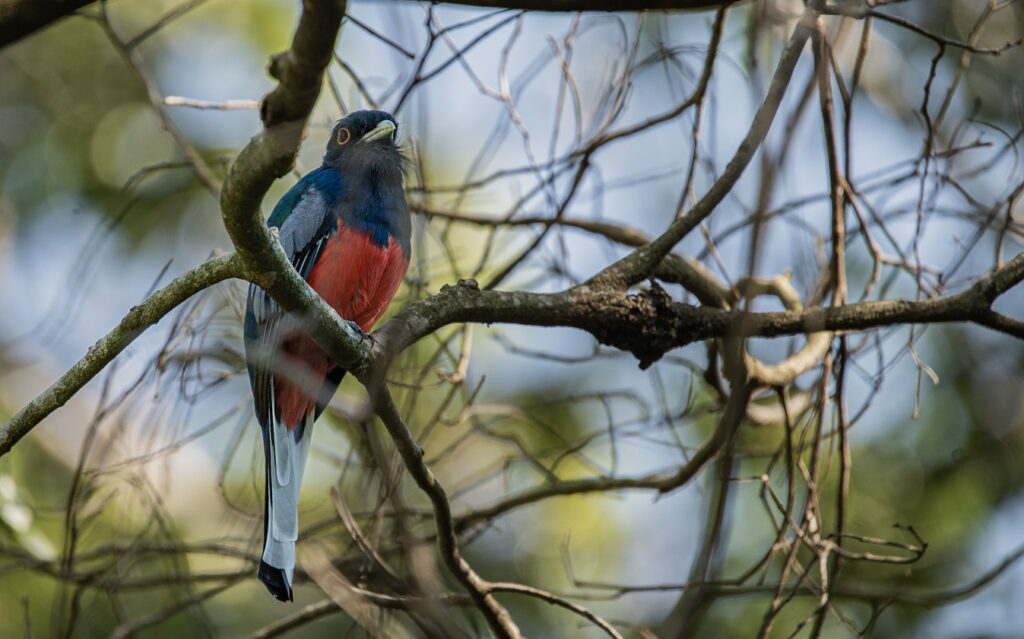
Peace brought by nature can only be interrupted by birds chirping, one of the main attractions for visitors, who seek to capture these colorful birds that seem to pose for these avid adventurers.

The area is also inhabited by capybaras, monkeys, tatús (a kind of armadillo), agutí (a big rodent), and tapirs, as well as some larger predators, although they are rarely seen in daylight or close to the trails created for visitors.

This eden amidst the rainforest was created by Adrián Heredia, who is not only a nature lover, but also an expert on the area having grown up in Andresito. Together with his wife, María Laura Alcaráz, they made their dream of showing nature to the world a reality. They both hold a bachelor’s degree in tourism by the National University of Misiones. 

Surucuá, which received the TripAdvisor Certificate of Excellence for three years in a row, is an ideal destination for those who want to experience the adventure of natural life. With comfortable cabins and delicious meals, tourists have the wilderness right at their fingertips without giving up the comforts of a great holiday. 

Adrián says, “We offer rainforest hikes, kayaking on the Iguazú River, and cycling along rainforest trails.”

The lodge’s rate averages around US$748 per two day, which includes full board and transfers to and from Comandante Andresito in a 4×4 vehicle. While you can drive your own vehicle, this is not recommended for those unfamiliar with the area. Transfers from Iguazú are also available for an extra fee.

Rates 2024 (2nd semester)

Rates include:
-Round trip transfer Andresito (town) – Surucuá – Andresito (town).
-Personalized attention from the owners.
-Accommodation with full board (breakfast, lunch and dinner – starter, main course and
dessert), fixed menu that will vary during your stay.
-Linen, maid and amenities (soap, shampoo and conditioner).
-Nautical kayak trip along the Iguazú River (subject to weather conditions). Restricted to
people with hip, back and leg problems. Also for pregnant women and
over 80 years old.
-Bike tour along jungle trails within the reserve.

Visitors are from Europe and Argentina, mainly from Buenos Aires and Rosario, particularly birdwatching enthusiasts. “From the very beginning, we have received guests form diverse places. Argentine tourists come from Córdoba, Neuquén, Corrientes, Resistencia, and Misiones, of course. From abroad, we’ve welcomed visitors from England, Australia, the Netherlands, Belgium, Germany, Italy, France, and Finland, the United States, Canada, South Africa, and Brazil”, says Adrian.

The young entrepreneur explains, “I think this place is extraordinary. I’ve always found what we have here to be special and wanted to share it. It’s a dream come true and within this process, I have discovered things I was not aware of. The more I learnt about the area, the more passionate I became. We considered it a truly unique space, full of palm trees, an endangered tree species. We realized that it had potential for tourism and that we could generate income in a different way.”

Adrián points out that “People come with high expectations to see animals, but they can be difficult to spot. Birds, on the other hand, are much easier to see. You can see amazing, colorful birds that we didn’t even know were here. We have the Surucuá itself, it is a colorful bird that inspired the lodge’s name. There are also Manakins and Woodpeckers”, explains Adrian.

“Our goal is to provide visitors activities in close contact with nature that may allow them to explore, learn, and value the outstanding environment of our province. To this end, we offer guided hikes along our extensive trail network, photographic safaris, birdwatching activities, and kayaking on the Iguazú River. With customized attention, comfortable facilities, and home-cooked meals featuring regional flavors, we ensure a pleasant and unforgettable experience.”

The impressive biodiversity of Misiones’ rainforest makes photography and birdwatching the most sought-after activities in Surucuá Reserve & Ecolodge, with photographers from all over the country coming here to capture the colorful birds in the rainforest with their cameras. This activity is rapidly growing in our country, and it is undergoing extensive development internationally, especially in countries such as England and the United States. “We believe that the province of Misiones has a huge potential for the development of this activity,” Adrián claims.

The venture was launched five years ago and offers a professional guide to welcome tourists. We have four rooms available, accommodating a maximum of twelve people. It is not recommended to visit the lodge with children under ten years of age, due to the challenging natural environment.

.-.-.-.-.-.-..-.-.-.-.-.-..-.-.-.-.-.-..-.-.-.-.-.-..-.-.-.-.-.-..-.-.-.-.-.-..-.-.-.-.-.-..-.-.-.-.-.-..-.-.-.-.-.-..-.-.-.-.-.-..-.-.-.-.-.-.

Traductores José Roa, Daira Dos Santos, Agustina Cusoilito, Valentina Mior y Rosario Maciel

Tecnicatura Universitaria en Traducción e Interpretación en Inglés – UCAMI

Correo: c.extension@fch.ucami.edu.ar

Compartí esta noticia !

Categorías

Solverwp- WordPress Theme and Plugin